Written from the perspective of a heavy user — more than RMB 2,000 a month on AI, well over a billion tokens across 2025. It reflects where things stand today; next month a new capability may change the picture again.
Trap one that looks lovely: using AI for market research and decisions
More and more industry research reports are AI-generated. As casual reading they are fine; use them to make decisions and you will fall into a hole.
To discuss the limits of AI-written market research — and this includes competitor analysis, pricing strategy, product FAB positioning and every other kind of market study — we have to go back to where the data comes from. Research data falls into two types: primary data and secondary data. Get those two definitions clear and you will understand why AI looks omniscient and yet sometimes talks confident nonsense.
Secondary data: AI’s home ground
Definition: information already collected, organised and published by people — financial reports, news, industry white papers, encyclopaedias.
This is AI’s absolute home ground. A large model is essentially a super-brain that has read almost all of the secondary data on the internet. Ask it about medical-aesthetics market trends in 2024 and it will condense the essence of several thousand reports in an instant.
But AI can only regurgitate. If the article does not exist on the internet, or the data sits behind a corporate firewall, AI can do nothing. Worse, the secondary data itself may be out of date, and AI will present a stale view to you as the current state of things.
Primary data: AI’s blind spot
Definition: original information that has to be gathered to answer the specific question in front of you — a survey about your new product, clinic interviews, the trend in competitors’ prices, distributor feedback, shifts in the user experience.
This is AI’s blind spot today.
The core value of market research usually lies in discovering truths nobody has recorded yet — primary data. AI can only extrapolate from a history that has already been recorded: secondary data.
When we prompt AI for industry research inside a report, what comes back is not real primary data but synthetic data.
It is an average computed from probabilities, not a living market as it stands today. Use AI for research and what you get is logically plausible, not factually true.
More pointedly, because Chinese social platforms are built to resist crawlers, what search engines can reach is incomplete to begin with. Ask AI to build a strategy on that basis and it will look coherent and be full of holes.
The same problem exists with overseas tools; only the degree differs. The difference is that if you are willing to pay the technical cost, the financial cost and the learning cost, the data ecosystem you can reach is more mature and the information more current.
Most people are unwilling to pay those three costs, and so they work from plausible-sounding answers and produce content that makes the market shake its head.
The more serious problem is an industry that can no longer tell the difference between a beautifully generated AI report and experience earned in the field. While everyone chases the convenience of generating content fast, genuinely differentiated thinking is being pushed to the margins.
Trap two that looks lovely: generating marketing assets from a prompt recipe
Here is something I have noticed: the marketing assets of many clinics have taken on a cheap AI look.
What is that look? It is:
visually overblown, with no brand character
copy that reads smoothly and says nothing
beautiful layouts with no consistency
Playing with a meme is fine; using them at random because everyone else is really does damage a brand’s character.
This is not to say AI cannot be used. Run the same prompt through Doubao, Kling, Nano Banana, Lovart, free tier and paid tier, and you will see exactly where meme-play ends and professional work begins.
Nor is meme-play itself the problem — the issue is that overall brand output has to be consistent. A professional brand always has a brand guideline, with strict requirements for typeface, spacing, colour values and visual output. Content generated by AI has to meet the brand standard too.
My feed is full of one-click AI posters that clearly never met a brand rule, brand videos in wildly different styles, filtered product images. Well — as long as they are enjoying themselves.
If Galderma or Allergan put out work like that, the brand team at headquarters would come running.
So much for those two problems, briefly. There is no end to this subject, none at all.
What I have learned using AI
At the start of 2026 I upgraded Claude Pro to Max, alongside ChatGPT Pro, Gemini Pro, Grok and the rest, and have not let AI clock off once. Over the past year I have worked my way deeply through the most advanced tools available.
Lately, WeChat Channels and social feeds are full of content teaching medical-aesthetics practitioners how to generate a market strategy in one click, mass-produce marketing assets, or use a prompt recipe for sales scripts. Some people are already charging for the training.
I cannot help saying it: if a market study takes a sentence or two, if one prompt completes a promotional strategy, if a free API builds a customer-management system, if scrounged tokens will do as they are told, then this industry is in for another round of chaos.
Not because what they say is wrong, but because the logic of taking things out of context is broken.
While everyone assumes that holding an AI tool equals holding marketing capability, a deeper divergence in judgement is quietly taking place.
Friends often ask me about using AI. I do not dare teach; I can only share. It feels like learning something new every day: in the first half of the year I was admiring ChatGPT’s eloquence, in the second half I was struck by the breadth of the Gemini family, and by year-end I was hopelessly absorbed in vibe coding.
PowerPoint and Word? I have not opened them in a long time. Canva is faster and prettier, and HTML is faster still for simple layouts — as long as the content is in your head, the tools are advancing at a thousand miles a day. Generate a deck with one click? None of the AI approaches to slides has reached normal commercial standards yet. Maybe before long. Hard to say.
I had just been learning how to write prompts for Nano Banana when Lovart’s layered design caught my attention, and then Nano Banana upgraded to Pro and fixed Chinese rendering and precision — superb for social content and scientific figures.
Claude shipped four updates last month; I had only just learned to carry project instructions forward through a project markdown file when the new skills feature sent me back to the start.
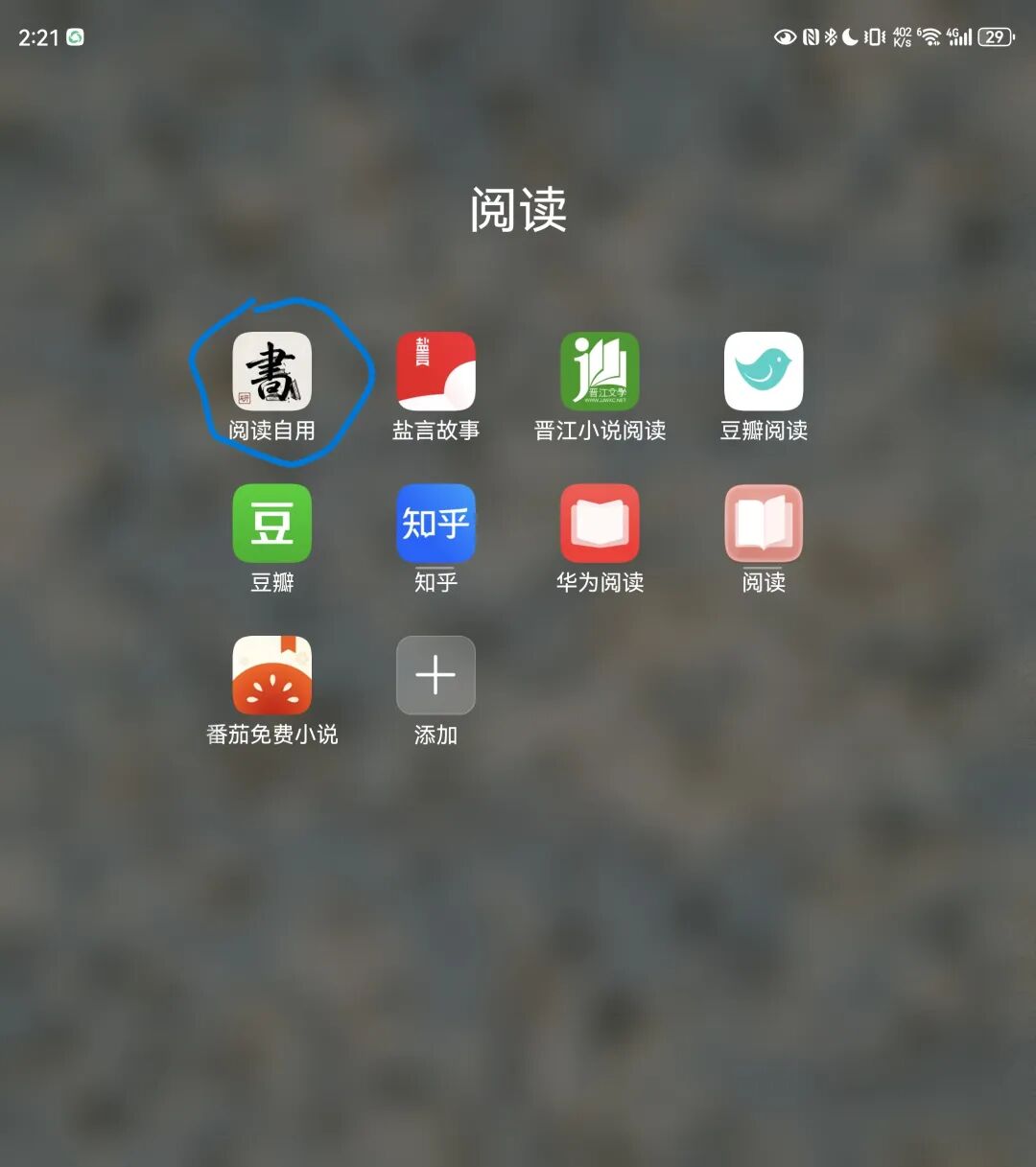
With a Claude Code + VS Code + Android Studio workflow, I hand-built a personal edition on top of the existing Legado framework. It integrates AI, open source, every text format, nested folders, custom TTS for listening, source ratings — everything a heavy reader needs. Utterly satisfying. (Open-source work cannot be published commercially; this is installed locally for my own use.)
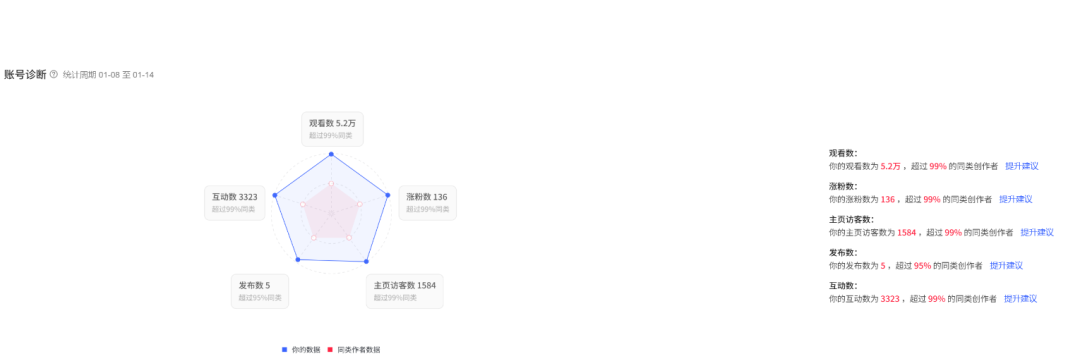
A workflow combining an RSS code library, Claude skills and Canva let me reproduce what makes a Xiaohongshu post take off. Half a month after launch, impressions passed 500,000 and every metric beat 99% of comparable accounts.
There is no time to learn it all, truly none. And yet without learning, this new technological era will leave you behind.
What I have learned
- Keep learning; embrace the shiftAI tools update fast. Traditional software is becoming AI-enabled step by step, or plugging into APIs, or even building its own LLM. Be brave about stepping into this era — the barrier is low and the leverage is revolutionary.
- Do not memorise recipes or copy prompts; learn the structure of a prompt
- Do not follow AI tool marketing blindly
AI updates genuinely change by the day, and technical iteration is measured in months.
That does not mean you have to chase every new tool.
What actually matters:
- build your own methodology (and let it improve and simplify as the technology moves)
- pick two or three core tools and use them deeply
- settle into a stable workflow (repeatable, iterable)
- do not trust AI’s answers and plans wholesale
- Accept that knowledge costs money
Getting things free is a deeply ingrained habit at home, and in the AI era it really will not do.
Compute, models and time are, in what the technology delivers, directly correlated with price.
But once you use it well, that price is nothing next to the cost of labour and the cost of communication.