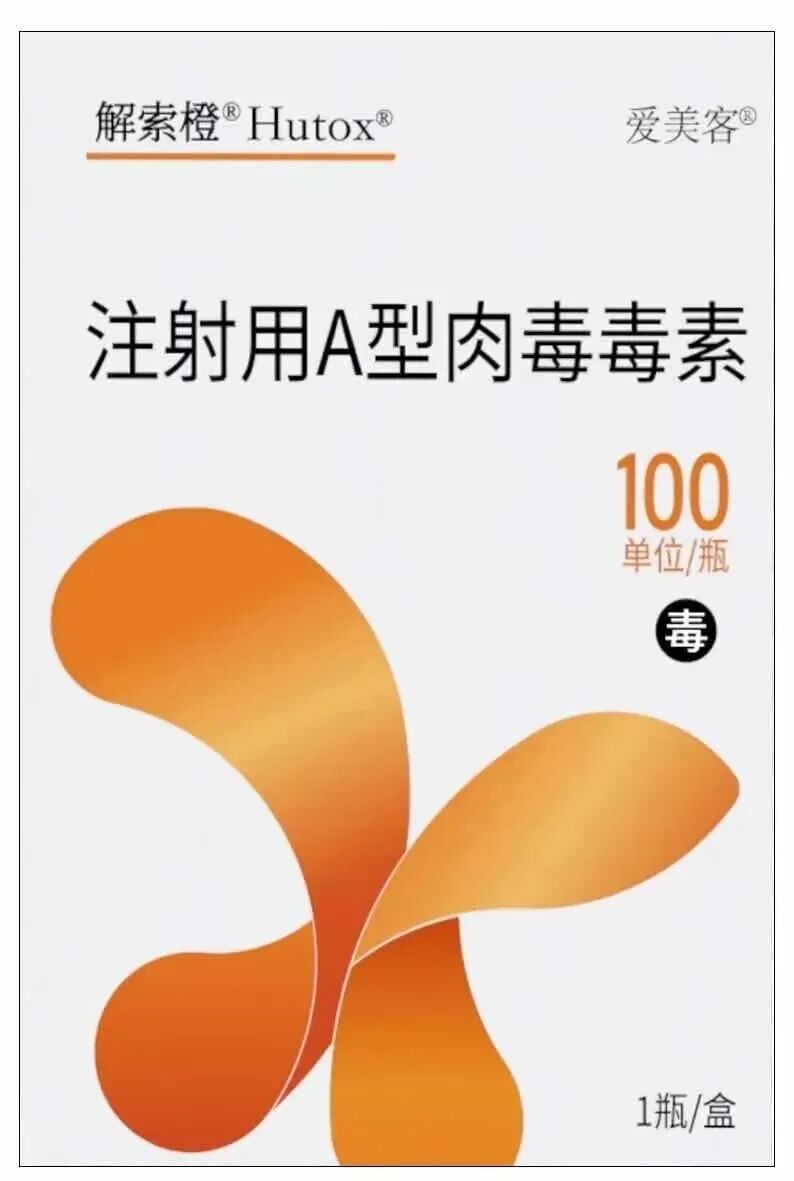
Imeik’s Hutox, sold in China as Jiesuocheng, has been approved. From Botox to Hengli, from Dysport to Letybo, from Xeomin to Daxxify, seven products are now crowded into the same ring — and yet Imeik is not the subject of this piece.
In this almost fully occupied contest inside China, a company called Revelyx Bio has taken the opposite route — carrying new Chinese recombinant toxin technology into overseas markets.
An American company with Chinese genes
36Kr reported the news a few days ago; you may well have seen it.
A company called Revelyx has just been established in Delaware, incubated jointly by NRL Capital and two other international investment firms. Its core product is 003, a recombinant botulinum toxin type A liquid formulation. The product comes from “a Chinese innovative pharmaceutical company”; Revelyx holds the exclusive global licence outside mainland China, Hong Kong and Macau, and the Chinese technology owner retains equity alongside cash and milestone payments.
No name was given publicly, but anyone in the industry will find it familiar.
YY003 is currently the only recombinant botulinum toxin liquid formulation in the world cleared by the FDA to enter clinical trials, developed by Chongqing Yinming Biotech. The timeline fits: Revelyx was established shortly after YY003 received FDA clearance. The technical route is singular — the combination of recombinant production and liquid formulation can be counted on one hand worldwide. Add the description of a first-generation product that has completed Phase III, which corresponds precisely to Yinming’s YY001 lyophilised formulation, and 003 is the liquid upgrade.
The answer speaks for itself. The more interesting question is this:
while every botulinum toxin manufacturer is fighting for the Chinese market, Yinming holds Chongqing Yuyan and its partnership with Huadong Medicine in one hand, and with the other takes a detour through Claruvis to develop international markets with international capital through Revelyx?
(All of the above is reasoned inference from publicly available market information. If anything is inaccurate, please contact me and I will correct it.)
The NewCo model: not selling a product, restructuring the value chain
The Revelyx case shows the logic of the NewCo model clearly.
Traditional routes abroad are product export, building a plant overseas, or international acquisition — in essence, allocating production capacity internationally. A Chinese company either does contract manufacturing or spends heavily to build its own system, concentrating the risk and consuming resources.
The NewCo model offers a more flexible way to play:
the Chinese pharmaceutical company carves out a specific pipeline and licenses it exclusively to a new overseas company. The carve-out is not an outright sale; long-term economics are retained. The original technology owner takes upfront cash, milestone payments and future royalties while keeping equity in the new company. International investors fund the NewCo, which concentrates its fire on overseas markets. Operating as an international company, it also sidesteps geopolitical risk.
The Chinese company is no longer merely a manufacturer" , but a technology provider and an equity beneficiary.
That is a step up in position within the global value chain. The head of NRL Capital’s healthcare group put it plainly: “Original innovation from China extending from serious medicine into consumer healthcare needs international capital to spread the risk. The NewCo model can focus on a small number of scarce core products and concentrate resources to maximise their value.”
The technical revolution in recombinant liquid formulation
Technical advantage is what gives Revelyx the confidence to encircle China from the outside. 003 uses recombinant botulinum toxin type A in a liquid formulation, which globally is next-generation technology.
Conventional clostridial fermentation with a lyophilised formulation carries biosafety risk, low product purity (13–15%) and the need for reconstitution in clinic. Recombinant technology produces the protein in engineered E. coli at purity above 99%, pre-filled as a liquid and ready on opening. That is not merely convenient. More importantly, it removes the inconsistency of concentration and the infection risk that manual handling introduces.
The technical challenge in a liquid formulation is stability — keeping a highly active protein molecule stable in liquid over time is a world-class problem. Korea’s Medytox launched Innotox, the first liquid toxin in the world, but its licence was revoked by Korea’s MFDS over quality issues, and it still cannot enter major markets such as China.
Revelyx’s 003 is precisely this technical direction. NRL Capital says the partner “has expressed the core botulinum toxin protein in E. coli in stable, high-purity, highly active form”. That matches Yinming’s technical route exactly: the YY001 lyophilised formulation has completed Phase III in China, and YY003 is the liquid iteration.
003 is currently in a Phase II trial for glabellar lines in Australia, with an overseas Phase III filing expected in 2026 and gradual expansion into indications such as upper-limb spasticity.
Buying the room to price on value
This is the more fundamental question.
The reality at home is that Botox holds the premium tier, Hengli holds value for money, and later entrants either fight on price or look for a niche. So far no stable, decisive third position has emerged.
At home, the value of technical innovation is usually buried under price sensitivity.
Overseas the logic is entirely different. The US has both a higher willingness to pay for technical innovation and a more developed system for assessing value. The convenience of a liquid formulation and the safety of recombinant technology both convert into a real market premium.
Behind that difference lie fundamental differences in the payment system and the maturity of the market.
Insurers, providers and patients in the US have systematic mechanisms for assessing the value of new technology, and are willing to pay for genuine technical progress. In China, consumer education is thin, clinics compete to excess, and there is no disciplined system for assessing treatment value. A registration certificate does not equal good technology, and good technology failing to command a good price is equally the reality today.
Revelyx’s choice is, in essence, a choice of a market environment that can price technical innovation rationally.
While the domestic market burns off the technical dividend in a price war, overseas markets have the mature conditions and the premium headroom ready for the next generation of technology.
Technical iteration is accelerating
Unlike hyaluronic acid, botulinum toxin globally is nowhere near technical maturity. It is, if anything, on the eve of another technical revolution.
New technology in botulinum toxin deserves an article of its own, so I will leave it here for now.
On the manufacturing side, the advantages of recombinant technology are batch-to-batch consistency, scalability of capacity and room for cost to fall. If Claruvis succeeds, a wave of followers will come, and botulinum toxin will enter a new recombinant era.
Chinese companies will certainly have the chance to follow in this round of technical iteration — provided the leaders out in front have a suitable mechanism for realising the value.
Thinking your way out of the grind
Audit your technical position, and have confidence in it
Do not rush into the melee in the red ocean. Ask first whether your technical advantage could earn a better return in a more suitable market environment. Overseas markets are not necessarily the largest, but they may be the ones most willing to pay for innovation.
A new model for working with capital
The elegance of the NewCo is that it is neither simply selling a product nor selling a company: it accelerates the realisation of value using outside resources while retaining the long-term economics.
Strategic thinking about market sequencing.
Sometimes the long way round is the shortest road.
The Anker gear on my desk reminds me that this Shenzhen company started out selling power banks on Amazon — Chinese technology, American brand — building a premium image overseas first and then entering the domestic market in reverse, successfully climbing out of the price war in consumer-electronics accessories at home.
Medical aesthetics can learn from that. Incidentally, I hear Anker’s Shenzhen headquarters and Peninsula Medical are neighbours.
Sustained investment in technical innovation
Only by staying technically ahead do you get to choose your market. Revelyx can choose overseas markets because the recombinant liquid-formulation technology it holds is genuinely scarce. The real moat is not the channel and not the brand; it is technology other people cannot build.
The price of technology and the value of it
From YY003 to 003, from Chongqing to Delaware — this is not only a change in a product’s geography, it is a paradigm shift in Chinese medical-aesthetics innovation, from manufacturing to creating value.
In certain technical fields, the Chinese medical-aesthetics industry already holds a global lead. How to convert that technical advantage into sustained commercial success, and how to occupy a better position in the global value chain — the answer may be hiding in cases like Revelyx.
In an era where technology and capital are so deeply intertwined, Chinese medical-aesthetics companies need more than the courage to enter. They need the judgement to enter well:
judgement in choosing the technical direction, judgement in building the business model, judgement in laying out where the value will sit.