Rather than the endless churn of the domestic market, I have always preferred to look at what is different in global markets and where the trends are pointing.
When I started out, I sat on the global side, in the management of a multinational, working on how to land an international brand’s influence in China and how to strengthen China’s academic voice and commercial weight within the group.
Over the past few years, though, the volume and the weight of Chinese companies internationally have risen sharply. The AMWC and IMCAS exhibition floors used to have a Korean street; today a stand is hard to get hold of because Chinese companies have taken them. That took barely three years.
More and more Chinese medical-aesthetics companies are going out: filing overseas registrations, building channels in Southeast Asia and the Middle East, taking stands at international congresses, even manufacturing or acquiring abroad. So let us talk about it: why internationalisation belongs at the centre of the strategic plan of every medical-aesthetics company.
A tide too large to ignore
Internationalisation is not only a big-company matter. Follow the news even loosely and you can feel the undercurrent of new products moving outward.
In late 2025, Peninsula Medical launched Peninsula Counterclockwise, the first Chinese-made radiofrequency skin-treatment device to hold Class III clearance from both China’s NMPA and the United States’ FDA.
In March 2025, Imeik announced a plan to acquire 85% of Korea’s REGEN Biotech for around USD 190 million.
Huadong Medicine runs its global operations through its wholly owned UK subsidiary, Sinclair.
Then there are HYAMED, Yuyan Biotech and others (I have written about their stories before…).
The routes Chinese medical-aesthetics companies are taking fall broadly into three types — ① the product route (registrations and clearances open the market); ② the acquisition route (buying a global distribution network and overseas registrations outright); ③ the raw-material route (B2B logic, a relatively low barrier); ④ and a handful building plants abroad directly.
It is not only the leaders moving. Plenty of small and mid-sized companies have started studying registration pathways in Southeast Asia in earnest, sending people to international congresses; some start-ups have begun their overseas groundwork before the product has even launched at home.
This has stopped being a question of whether to do it. It is now a question of when you start, given that others already have.
Why this is the window
Start with the numbers. China’s medical-device exports in 2024 reached USD 48.75 billion, up 7.3% year on year. In 2025, China’s merchandise trade surplus reached USD 1.2 trillion, above 6% of GDP; in the official figures released over the past two years, export trade has ranked among the top three contributors to growth.
The density of policy around exporting drugs and devices over the past two years has few precedents in the history of Chinese industrial policy. MIIT has built pharmaceutical cooperation platforms with BRICS and Belt-and-Road countries; the NMPA keeps widening the scope of export certification; in October 2025, MOFCOM and four other ministries issued a joint document establishing an end-to-end overseas support system. The “China Drug Registry” system that went live in December 2025 sets, directly, an international pricing benchmark for Chinese innovative drugs and devices. The National Healthcare Security Administration has already made “raising the international standing of China’s pharmaceutical industry” a priority for 2026.
The state is not only encouraging you to go out; it is building the roads, the bridges and the channels for you. If you hold a registration certificate and have not started thinking about going international, you are not waiting for the right moment — the market is waiting for you to wake up.
It is not that hard — the international road can be walked step by step
For a lot of company owners, the word “international” summons FDA and EU MDR — two unclimbable mountains. And then they give up.
That is the biggest misconception about going international.
The real route out is a clear staircase. The first step is ISO 13485 quality-system certification, the passport to international markets; the second is the EU CE mark, which directly helps with market access across much of Southeast Asia; after that you take the certificates each target market requires, one at a time.
The elegance of this path is that one certificate opens many. Southeast Asian countries typically import around 90% of their medical devices, market-access thresholds are relatively friendly, and the region is the most natural first stop for Chinese medical-aesthetics products. The quality management system, clinical evaluation reports and compliance documentation you build while preparing for Southeast Asia are precisely the foundation for an EU MDR application later. The files are almost all reusable, and companies with the experience and the resources can run both in parallel. Every one of those moves also adds a brick to the brand you are building at home.
Have you not noticed how many Chinese medical-aesthetics companies now describe themselves as international brands, international businesses?
You do not have to arrive in one leap. What is being raced right now is who takes the first step.
The hidden cost of staying home
Someone always says: get the domestic market right first. Ten years ago that was true. It looks more and more like an excuse now.
What is actually happening at home? Prices keep sliding; me-too competition has gone white-hot and margins keep compressing; the capital markets have already put a ceiling on the valuation of a pure domestic-demand story. In a fight over a fixed pie, staying home is not prudence — it is locking yourself in a box that is setting hard.
And what are the companies that have already stepped out getting? Incremental revenue from overseas markets, a brand premium from international certification, and — back home — the brand advantage and the valuation that come with the label of a global company.
FDA clearance data for 2025: plastic surgery led every category with 125 clearances. But the number of companies filing has fallen for three consecutive years, and the shake-out is accelerating. The early movers are building barriers; the window for those still watching narrows by the day.
Two conversations: the view from IMCAS
At the IMCAS industry reception I had a genuinely interesting exchange with IMCAS CEO Ms Séverine Dubarry Bardon.
As one of the most influential academic platforms in global medical aesthetics, the IMCAS Paris edition has become almost impossible for Chinese companies to get into; many are working hard on accumulating points to secure a place. IMCAS Shanghai, meanwhile, draws more overseas physicians than any other congress in China — above 50% of attendance. Clearly this is not simply a congress for Chinese physicians and Chinese companies. It is an international node sited in China.
When I asked Ms Séverine about the route Chinese companies should take, the answer was very IMCAS: overseas markets are physician-led. When international physicians encounter Chinese products and technology through the most respected academic platform in the field, that is the best endorsement there is — and many of them will go looking for distribution, sales and registration opportunities themselves.
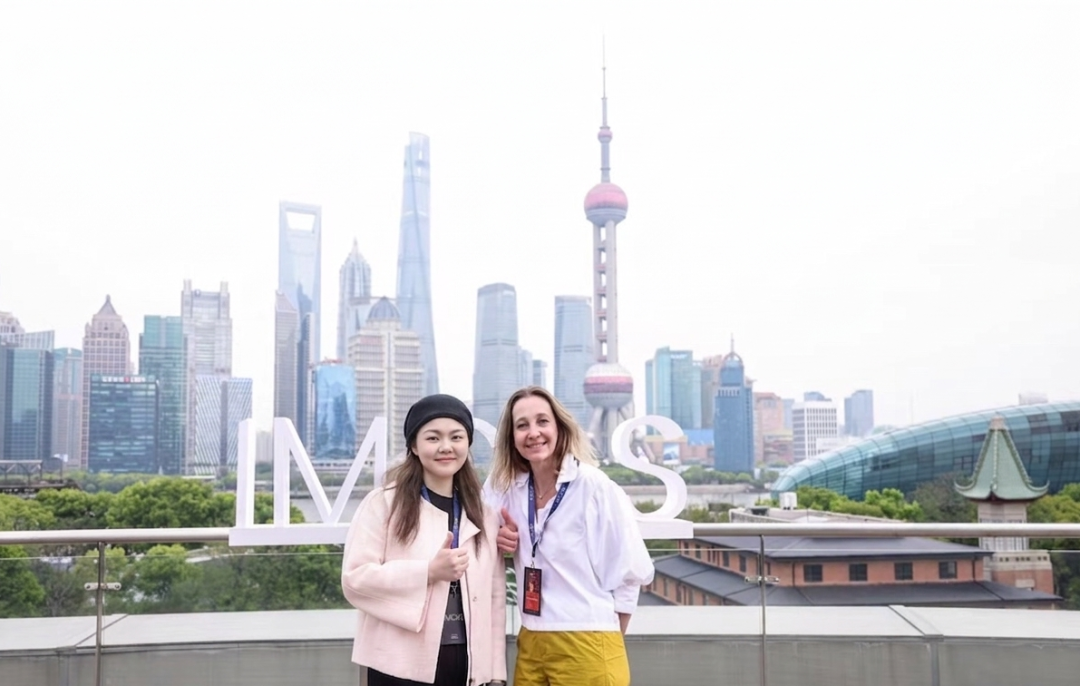
That matches the physicians I have met at more international congresses than I can count since entering this industry. Overseas, the physician’s role really is plural: physician, key opinion leader, distributor, clinic owner — and often the person who knows which local registration and clinical resources actually work.
This reveals something Chinese companies easily miss: in mature overseas medical-aesthetics markets, the physician is the channel. It is not that a distributor picks your product; it is that distributors come to you once physicians have picked it. That is the exact inverse of the Chinese logic of laying the channel first and educating physicians later. Academic platforms like IMCAS do not close deals themselves; what they do sits further upstream — they put your product in front of the most expert physicians in the world, and let the market make its own choice.
IMCAS Asia-Pacific scientific director Wang Ling shared some important cautions with me too: a Chinese company going abroad has to understand the culture, the political environment and the law of the target market in depth. Operating conditions overseas are not the ones you know at home. Run the overseas business on the domestic playbook at ground level and the difficulties will still find you.
From finance through registration, every link has to respect local policy and local culture. Going out is not only selling the product over there; it is building the ability to belong there.
After the Class III certificate, what next
A company that already holds a domestic Class III device registration has cleared China’s most demanding review. That underlying capability is enough, anywhere in the world, to justify the confidence to go out. What follows is a piece of systematic preparation.
Plan the certification staircase
ISO 13485 is the foundation, MDR is the lever, FDA is the advanced target. Arriving in one leap is hard — so work the certification path backwards from the target market. Most Southeast Asian countries recognise EU standards, and holding the EU certificate is close to opening the whole region, from Singapore to Malaysia, from Thailand to Indonesia.
Academic outreach — the underrated brand route
Before the product enters a new market, the brand and the clinical data should already be there. International congresses are the most efficient route — IMCAS, AMWC, ISAPS offer more than a stand; they let overseas physicians meet your product in a professional context. One high-quality scientific presentation can be worth more than ten business calls spent hunting for a way in.
Compliance first, and the channel follows
The logic of overseas channels is nothing like the domestic one. Distribution is a result, not a starting point. Another threshold in front of Chinese companies, I think, is completing the international expression of the brand first — an English website, an international product brochure, a visual system that reads well to an overseas eye. More importantly, from product registration to financial compliance, from intellectual property to local operations, every link needs a real grasp of local rules. Take the domestic playbook out unchanged and, judging by how brands present themselves in the home market today, you may find nobody at the door.
Intellectual property first
Before entering any country, the brand and the product form have to be registered internationally. Trademark squatting, patent disputes, brand collisions — any one of them can mire your plan at the starting line. This is not a later problem. It is a now problem.
A closing note
Chinese medical aesthetics is standing on a watershed. The domestic market has moved from growth to a fixed pie, the policy hand is pushing companies outward, and international markets are waiting for Chinese products. Every signal points the same way.
But internationalisation cannot live only in the strategy deck. What it needs is a move made today — even if that move is only putting ISO 13485 on the calendar, sending one person to one international congress, or seriously assessing whether your product can be registered in Southeast Asia.
This era will not wait for any company to feel ready. It will reward the ones that take the first step.
Data cited in this article: National Bureau of Statistics; China Chamber of Commerce for Import and Export of Medicines and Health Products; Vcbeat Research